Post-Construction Office Cleaning Explained
Post-Construction Office Cleaning Explained: From Debris to Move-In Ready
Ninety-three percent of construction projects are completed with debris still scattered throughout the facility. That’s not normal wear—that’s a symptom of incomplete cleanup planning.
A Springfield commercial real estate firm completed their newly renovated office building. The construction company assured them it was “ready to move into.” The first day, employees arrived to find drywall dust coating every surface, protective plastic sheeting still covering fixtures, and construction residue covering the floors. What was supposed to be occupancy-ready turned into a two-week cleaning nightmare. They discovered the hard way that construction contractors handle construction—they don’t handle occupancy-ready cleaning.
Post-construction office cleaning isn’t just “cleaning a dirty space.” It’s a specialized service removing construction-specific contamination, hazardous residues, and debris that standard cleaning companies aren’t equipped to handle. Understanding what this service actually involves helps businesses avoid expensive mistakes and occupancy delays. Let’s break down what genuine post-construction cleanup looks like.
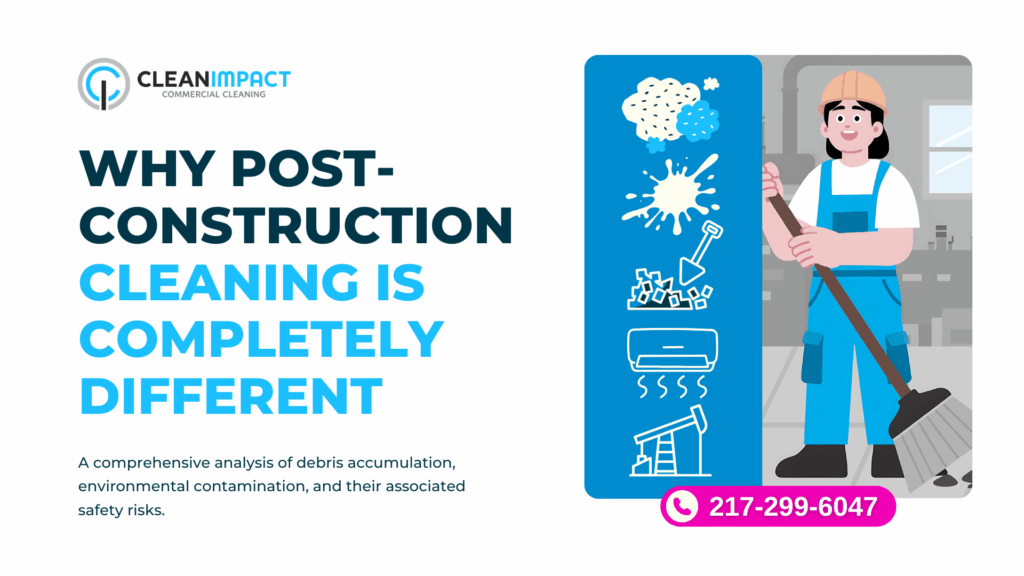
Why Post-Construction Cleaning Is Completely Different
Understanding Construction Debris and Contamination
Construction creates materials standard cleaning doesn’t address. Drywall dust embeds deep into carpet fibers, HVAC systems, and equipment. Concrete dust particles are larger and more stubborn than regular dirt. Paint splatters, caulk residue, and adhesive remnants require specialized removal techniques. Temporary protective coatings left over from construction need systematic stripping. A standard cleaning crew isn’t trained to handle these specialized contaminants.
One Springfield medical office discovered dust embedded in their ventilation system after moving in because the construction company’s “cleanup” had been superficial. Three months later, dust was still circulating throughout the building. Professional post-construction cleaning would’ve included HVAC system purging and detailed ductwork cleaning before occupancy.
The Risks of Inadequate Post-Construction Cleanup
Leftover construction debris creates health hazards. Respiratory irritation from fine dust. Allergic reactions to construction materials. Potential exposure to hazardous substances if lead paint or asbestos removal was involved. Equipment malfunction from dust infiltration. These risks extend far beyond annoyance into genuine facility and employee safety concerns.
Financial damage compounds inadequate cleanup. Construction residue damages finishes prematurely. Embedded dust shortens HVAC lifespan. Unremoved protective coatings prevent proper surface bonding for future maintenance. One Springfield office building skipped professional post-construction cleaning, then faced $6,000 in HVAC replacement six months later because dust had damaged the system. That cleanup cost would’ve been $1,200—the math was devastating in hindsight.
Breaking Down the Multi-Stage Cleanup Process
Rough Cleanup vs. Final Cleaning (They’re Separate)
Rough cleanup happens before final finishes are installed. Workers remove large debris, protective coverings, and temporary structures. This phase prepares the space for final construction stages. It’s not occupancy-ready cleaning—it’s construction site sanitation.
Final cleaning happens after all construction concludes. This intensive phase removes all remaining dust, debris, and construction residue, leaving the facility completely move-in ready. Confusing these phases or skipping final cleanup is where problems develop. One Springfield law firm scheduled cleanup during rough construction phase, then discovered they needed intensive final cleaning after construction completion. They ended up paying for cleaning twice.
Specialized Tasks Construction Contractors Miss
Professional post-construction cleaning includes HVAC ductwork purging, window and fixture cleaning, baseboard and trim detail work, paint splatter removal, floor grinding to remove adhesive residue, and protective coating stripping. Construction contractors typically skip these tasks. A Springfield retail location’s construction company left protective plastic sheeting on ceilings and windows. The post-construction cleaning crew removed approximately 400 square feet of plastic protection—something the construction team had overlooked entirely.
What Professional Post-Construction Cleaners Actually Do
Hazardous Material Handling and Safety Protocols
If renovation involves lead paint removal or asbestos handling, specialized protocols apply. Professional post-construction cleaners understand hazardous material procedures, use appropriate protective equipment, and follow EPA guidelines. This isn’t amateur territory—it’s certified contractor work.
Dust control during cleanup prevents cross-contamination to finished areas. Negative air pressure systems, sealed barriers, and HEPA filtration contain dust. One Springfield tech company’s post-construction cleaning involved sophisticated dust suppression preventing construction contamination from spreading throughout their sensitive equipment areas.
Equipment and Techniques Specific to Construction Cleanup
Industrial-grade HEPA vacuum systems capture fine construction dust regular vacuums miss. Pressure washing removes embedded residue from hard surfaces. Floor grinding strips adhesive and protective coatings. Specialized cleaning solutions dissolve paint splatters and construction compound residue. These tools and techniques aren’t standard cleaning equipment—they’re construction cleanup specialization.
The Timeline and Coordination of Construction Cleanup
Scheduling Around Ongoing Construction
Coordinating cleanup while construction is finishing requires logistics planning. Some areas can be cleaned while construction continues in other zones. Proper phasing prevents recontamination. One Springfield office complex scheduled cleaning systematically by department, allowing each area to be fully occupancy-ready while other departments still completed final construction touch-ups.
Creating an Occupancy-Ready Facility
Final cleaning verification includes walk-through inspection confirming all debris removal, dust elimination, and surface restoration. This quality check prevents move-in surprises. Professional post-construction cleaning provides documentation and sign-off confirming occupancy-readiness.
Avoiding Expensive Post-Construction Mistakes
Critical Mistakes:
- Assuming construction contractors will handle final cleaning (they won’t)
- Scheduling cleanup during construction rather than after completion
- Using standard cleaners unprepared for construction-specific contamination
- Skipping hazardous material protocols when renovation involved demolition
- Neglecting HVAC and ductwork purging before occupancy
Professional Post-Construction Office Cleaning Services
Professional post-construction office cleaning requires specialized expertise, hazardous material training, construction-specific equipment, and thorough understanding of occupancy requirements. Clean Impact LLC provides complete post-construction cleanup transforming construction sites into move-in ready facilities.
Our post-construction cleaning services include debris removal, dust elimination, hazardous material handling, HVAC purging, fixture cleaning, floor restoration, and occupancy verification ensuring your new office space is completely construction-free and ready for operations.
Get Your New Space Move-In Ready
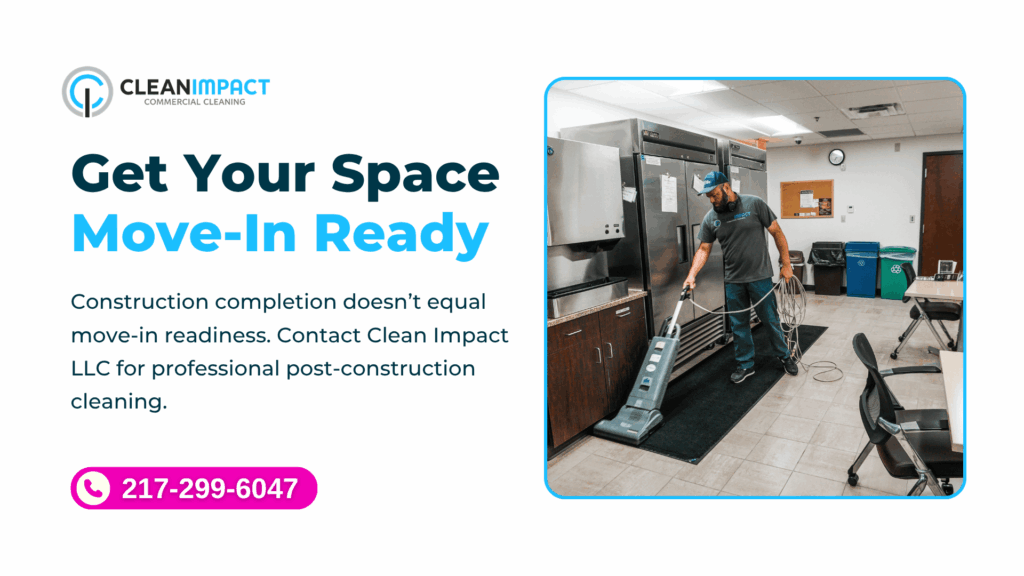
Construction completion doesn’t mean occupancy readiness. Professional post-construction cleaning removes construction-specific contamination, hazardous residues, and debris that standard cleaning can’t address. Investing in proper post-construction cleanup prevents health hazards, equipment damage, and expensive remediation later.
Contact Clean Impact LLC for comprehensive post-construction office cleaning. Let’s transform your newly renovated space from construction site to fully occupancy-ready facility. We’ll handle the specialized cleanup so your business can move in immediately.