Detailed Office Cleaning for High-Traffic Areas
Detailed Office Cleaning for High-Traffic Areas: The Real Strategy
Eighty-seven percent of carpet damage in offices occurs in just 20% of the space. That’s not random wear—that’s concentrated traffic destroying high-use zones while neglected areas stay perfectly fine.
A Springfield medical office noticed their entrance carpet looking dingy after just two years while back offices remained fresh. The entrance experiences thousands of foot contacts monthly—tracked-in dirt, moisture, microbes, and physical wear that compound exponentially. Meanwhile, isolated areas barely see traffic. They were applying maintenance resources evenly instead of concentrating effort where damage accelerated fastest. Once they shifted to intensive high-traffic cleaning, their entire carpet lasted 50% longer because they prevented localized collapse.
High-traffic areas require completely different cleaning strategies than standard spaces. They deteriorate faster, accumulate contamination quicker, and demand more frequent intervention. Understanding what actually works in these zones prevents premature damage while extending asset lifespan dramatically. Let’s explore the specialized approach that protects your facility’s heaviest-used areas.
Why High-Traffic Areas Deteriorate Differently
Understanding Accelerated Wear Patterns
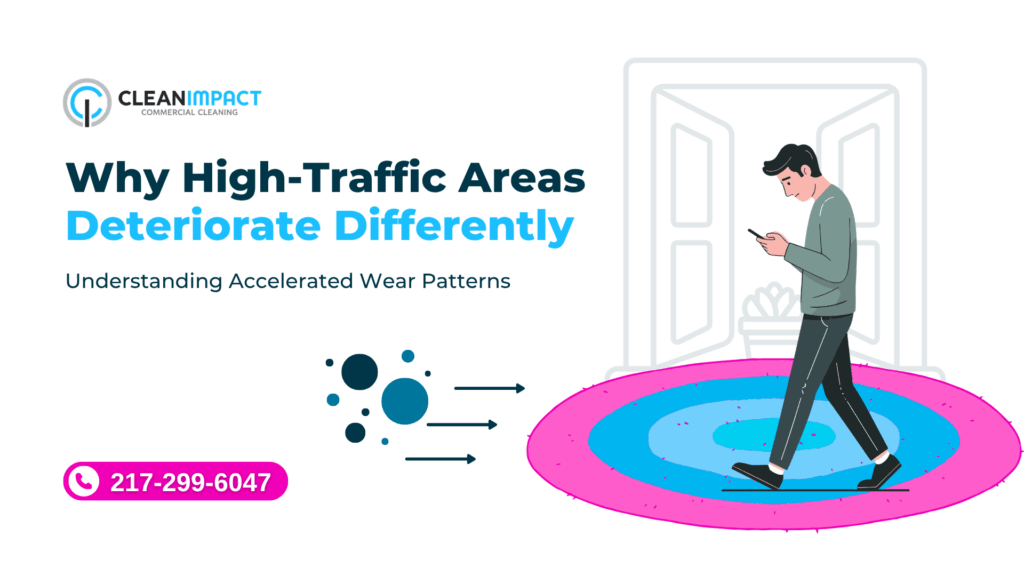
Heavy foot traffic creates predictable wear patterns. Carpet fibers compress permanently where people walk repeatedly. Microscopic soil particles embed deeper with continuous foot pressure. Stains set faster through constant moisture exposure. This isn’t poor cleaning—it’s the physics of repeated traffic. One Springfield law office’s entrance carpet showed significant matting within one year while their executive area stayed pristine. The difference was foot traffic—hundreds daily versus dozens.
Physical wear accelerates in high-traffic zones geometrically. A carpeted corridor sees footsteps constantly. Each step deposits particles that subsequent traffic pushes deeper. Within months, light accumulation becomes heavy contamination. Standard vacuuming can’t extract embedded particles. The zone requires extraction cleaning pulling contaminants from fiber depths that regular maintenance misses.
The Dirt Accumulation Multiplier Effect
High-traffic areas accumulate dirt faster through two mechanisms. First, more people means more contamination sources. Second, tracked-in materials from outdoor traffic introduce larger soil particles. These bigger contaminants cause faster deterioration than office-generated dust. One Springfield retail location discovered their entrance accumulated outdoor dirt at five times the rate of interior areas. That multiple changed everything about their cleaning strategy.
Bacterial and microbial growth accelerates in high-traffic zones too. More foot contact means more biological contamination. Moisture from wet shoes creates ideal growth conditions. These zones become health concern areas if cleaning standards don’t intensify accordingly.
Identifying Your High-Traffic Zones
Common Problem Areas in Offices
Priority Zones:
- Entrance and exit points (tracked-in weather, dirt, moisture)
- Elevator and stairwell areas (constant vertical traffic)
- Hallways and corridors (circulation routes)
- Break rooms and restrooms (frequent use, moisture concentration)
- Reception areas (client/visitor concentration)
Each zone presents specific challenges requiring targeted approaches.
Traffic Flow Analysis and Cleaning Priorities
Professional cleaners analyze traffic patterns identifying concentration areas. Some corridors are minor passages while others are primary routes. Some restrooms see constant use while others remain quiet. Effective cleaning prioritizes based on actual traffic rather than assuming uniform maintenance.
One Springfield corporate office mapped foot traffic patterns and discovered their restroom usage varied dramatically by floor. Upper executive floors saw minimal use while middle floors were heavily trafficked. They adjusted cleaning intensity accordingly, concentrating resources where need was highest.
Specialized Cleaning Approaches for Heavy-Use Spaces
Carpet and Floor Care in High-Traffic Zones
Carpet in high-traffic zones requires more frequent extraction cleaning. Monthly steam extraction in corridors versus quarterly for low-traffic areas extends lifespan significantly. Between extractions, daily vacuuming with commercial-grade equipment removes surface contamination before it embeds deeper.
Protective treatments help too. Applied sealants on carpet fibers make stains easier to remove and resist embedding. Stain guards aren’t luxury—they’re maintenance tools extending carpet life substantially in high-wear zones. One Springfield consulting firm applied protective treatment to their entrance carpet, then cleaned with aggressive extraction monthly. That carpet lasted four years instead of the two-year lifecycle they experienced previously.
Hard floors in high-traffic zones need different care. Regular mopping doesn’t address embedded soil. Periodic floor stripping and rewaxing restores appearance. High-pressure cleaning removes ground-in contaminants. Without these intensive interventions, hard floors deteriorate rapidly under heavy traffic.
Restroom and Break Area Strategies
Restrooms in high-traffic areas need hourly or twice-daily attention during business hours. Not just cleaning—systematic sanitation preventing bacterial growth and odor development. Break rooms require frequent surface wiping and sanitization. Refrigerators need regular interior cleaning. These details prevent hygiene issues that undermine facility reputation.
Frequency and Intensity: Getting the Balance Right
Daily Maintenance vs. Deep Cleaning Cycles
High-traffic zones benefit from daily detailed attention combined with weekly or bi-weekly deep cleaning. Daily work prevents accumulation. Deep cleaning addresses embedded contamination regular maintenance misses. This combination maintains appearance while extending asset lifespan.
One Springfield accounting firm implemented daily corridor attention—detailed vacuuming and spot cleaning—combined with monthly extraction. That rhythm kept their entrance looking fresh year-round while preventing the deterioration they’d experienced previously.
Knowing When Areas Need Extra Attention
Seasonal changes affect high-traffic zones differently. Winter brings tracked-in salt and moisture. Summer brings dust and pollen. Professional cleaners adjust protocols seasonally. After winter, intensive floor restoration removes salt damage. Summer might trigger more frequent carpeting due to increased pollen and dust.
Prevention Strategies That Actually Work
Key Prevention Approaches:
- Protective floor treatments and sealants reducing stain penetration
- Entrance matting systems capturing dirt before it reaches main flooring
- Strategic traffic routing minimizing wear concentration
- Regular protective reapplication maintaining treatment effectiveness
- Preventive extraction before visible soiling develops
Professional High-Traffic Area Cleaning Services
Detailed office cleaning for high-traffic areas requires traffic analysis, specialized equipment, and adjusted frequency protocols. Clean Impact LLC understands high-traffic zone challenges and provides intensive maintenance preventing accelerated deterioration.
Our high-traffic office cleaning services include traffic pattern analysis, protective treatment application, intensive extraction cleaning, sanitation protocols, and strategic scheduling maximizing asset longevity in your facility’s most-stressed areas.
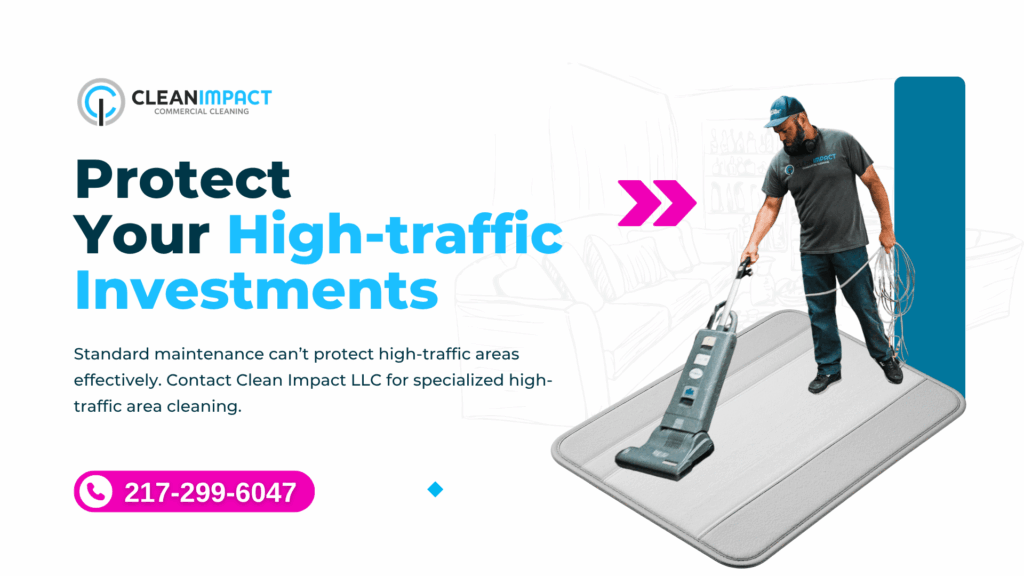
Protect Your High-Traffic Investments
High-traffic areas deteriorate five to ten times faster than low-traffic zones. Standard maintenance can’t protect them effectively. Specialized intensive cleaning addressing traffic-specific challenges prevents premature damage while extending facility asset life significantly. The difference between treating all areas identically and concentrating resources on heavy-use zones often equals years of additional floor and carpet lifespan.
Contact Clean Impact LLC for traffic-pattern analysis and specialized high-traffic area cleaning. Let’s implement intensive protocols protecting your facility’s heaviest-used spaces and maximizing asset longevity.