Business Cleaning Company Near me
Your 2025 Guide to Hiring the Best Business Cleaning Company Near You
A recent study found that 94% of customers form their first impression of a business within the first seven seconds of entering. What do those seven seconds reveal about a workplace? Often, it comes down to cleanliness. The coffee stains on the reception desk, the dusty blinds, or the sticky floors tell a story before any employee says a word.
Choosing a business cleaning company near me represents more than just checking off a maintenance task. It creates an environment where employees feel valued and customers feel confident. The right commercial cleaning partner transforms workplace hygiene from an afterthought into a competitive advantage. This guide explores everything business owners need to know about selecting professional janitorial services that deliver results.
Why Professional Commercial Cleaning Services Matter More Than Ever
The Hidden Cost of Dirty Business Spaces
Business owners often underestimate the financial impact of inadequate cleaning. A dirty workplace doesn’t just look bad—it costs money in ways that aren’t immediately obvious. Employee sick days increase when offices harbor bacteria and allergens. One manufacturing facility in Ohio discovered their absenteeism dropped by 23% after implementing a comprehensive commercial cleaning services program that included daily disinfection of high-touch surfaces.
The connection between workplace cleanliness and productivity proves stronger than many realize. Research from the International Sanitary Supply Association shows employees lose an average of 2.5 hours per week searching for items in cluttered, disorganized spaces. When professional cleaners maintain order and cleanliness, workers spend more time on revenue-generating activities and less time navigating chaos.
Equipment longevity also depends on regular maintenance. Dust accumulation on computer systems causes overheating and premature failure. Carpet neglect leads to replacement costs that exceed routine cleaning expenses by 500%. A professional janitorial services contract protects these investments through preventive maintenance schedules.
First Impressions and Customer Perception
Walking into a pristine business environment creates psychological comfort. Customers make split-second judgments about professionalism based on visual cleanliness cues. A law firm in Chicago lost three high-value clients before discovering the problem wasn’t their legal expertise—it was the grimy windows and dusty furniture in their consultation rooms. After hiring a dedicated office cleaning company, client retention rates improved within two months.
The healthcare industry understands this principle intimately. Medical facilities must maintain impeccable sanitation standards, not just for infection control but for patient confidence. A dental practice might offer the most advanced treatments available, but patients flee if the waiting room smells musty or the floors show visible dirt. Commercial property cleaning becomes a fundamental component of customer retention strategy.
Retail businesses face even more scrutiny. Shoppers avoid stores that appear dirty or poorly maintained. Mystery shopper studies reveal 67% of potential customers leave retail spaces within five minutes if they encounter unclean restrooms or cluttered aisles. Professional business cleaning services create an environment where customers linger longer and spend more money.
What to Look for in a Business Cleaning Company
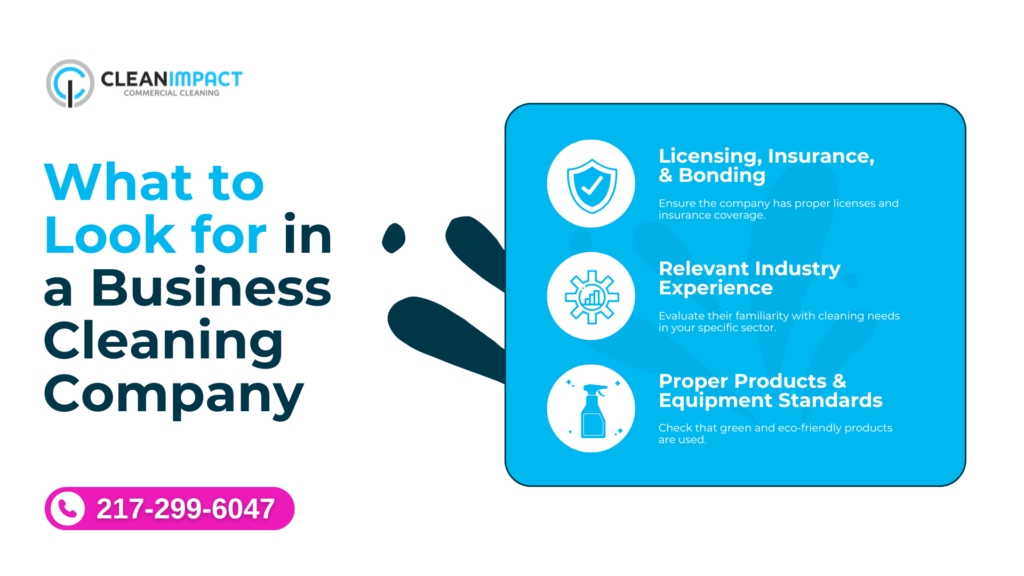
Licensing, Insurance, and Bonding Requirements
The cleaning industry contains more unlicensed operators than most business owners realize. Hiring an uninsured cleaning contractor creates massive liability exposure. If a cleaner gets injured on company property, the business owner may face workers’ compensation claims. If cleaning staff damages expensive equipment or steals from the office, an unbonded company offers no recourse.
Legitimate commercial cleaning services carry three essential protections:
- General liability insurance covering property damage and accidents
- Workers’ compensation insurance protecting against employee injury claims
- Bonding providing financial guarantees against theft or dishonesty
Smart business owners verify these credentials directly with insurance carriers rather than accepting certificates at face value. Some cleaning contractors present expired or fraudulent documentation. A quick phone call to the insurance company confirms active coverage and appropriate limits. Most experts recommend minimum liability coverage of $1 million for general commercial cleaning work, with higher limits for specialized industries like healthcare or food service.
Licensing requirements vary by state and municipality. Some jurisdictions require specific business licenses for janitorial service companies, while others mandate environmental certifications for facilities using certain cleaning chemicals. Business owners should check local regulations and ensure their cleaning provider complies with all applicable requirements.
Experience with Your Industry Type
Not all cleaning companies understand industry-specific requirements. A crew that excels at office building maintenance might struggle with medical facility protocols. Healthcare cleaning demands knowledge of OSHA bloodborne pathogen standards, EPA-registered disinfectants, and proper PPE usage. A cleaning company without healthcare experience could create infection control problems rather than solving them.
Restaurant and food service cleaning requires HACCP familiarity and food safety certification. Cleaners must understand cross-contamination prevention, proper sanitizer concentrations, and health department inspection criteria. A restaurant owner in Texas hired the cheapest business cleaning company near me without verifying food service experience—the result was a failed health inspection and temporary closure.
Industrial and manufacturing environments present unique challenges. Factories contain specialized equipment, chemical hazards, and strict safety protocols. Cleaning crews need appropriate training for confined space work, lockout/tagout procedures, and hazardous material handling. The wrong cleaning contractor could trigger OSHA violations or workplace accidents.
Cleaning Products and Equipment Standards
Modern commercial cleaning solutions have evolved beyond basic mops and buckets. Professional companies invest in commercial-grade equipment that delivers superior results:
| Equipment Type | Benefits | Applications |
| HEPA Vacuums | Remove 99.97% of particles, improve air quality | Medical offices, schools, allergen-sensitive areas |
| Microfiber Systems | Capture bacteria, reduce chemical usage | All hard surfaces, glass, stainless steel |
| Auto Scrubbers | Deep clean large floor areas efficiently | Warehouses, retail spaces, manufacturing |
| Electrostatic Sprayers | Apply disinfectant evenly to all surfaces | High-traffic areas, outbreak response |
| Hot Water Extractors | Remove deep carpet stains and allergens | Offices, hotels, healthcare waiting rooms |
The cleaning products matter as much as the equipment. Green cleaning has moved from trend to standard practice. Eco-friendly products reduce employee exposure to harsh chemicals while maintaining cleaning effectiveness. The EPA’s Safer Choice program certifies products that meet strict environmental and health standards. Business owners should ask potential cleaning contractors about their product selection criteria and environmental commitments.
Types of Commercial Cleaning Services Available
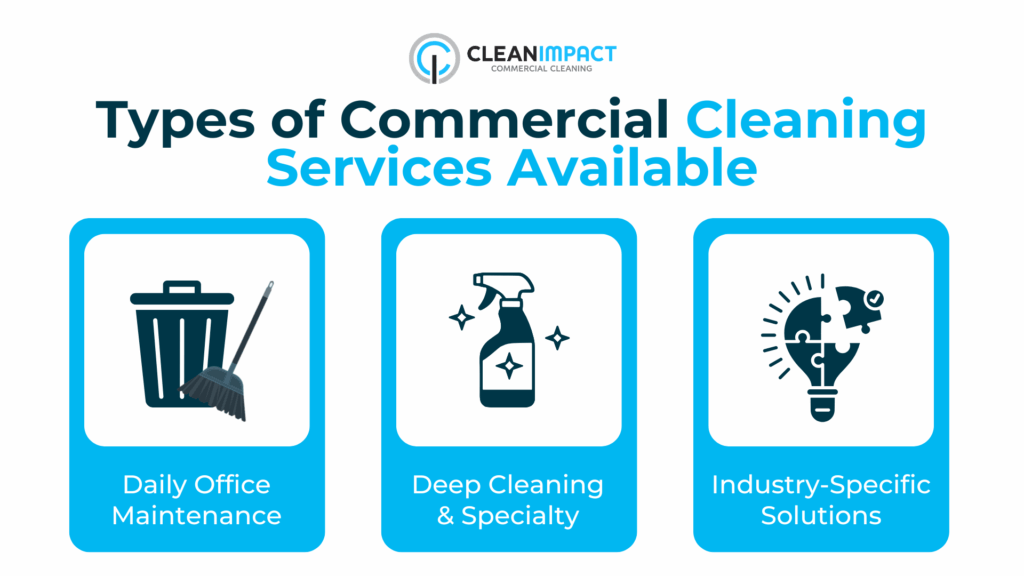
Daily Office Maintenance Programs
Standard office cleaning services typically operate on nightly schedules after business hours. These programs handle routine maintenance tasks that keep workplaces presentable:
- Trash removal and recycling
- Vacuum carpets and sweep hard floors
- Dust furniture, fixtures, and equipment
- Clean and disinfect restrooms
- Wipe down break room surfaces and appliances
- Spot clean carpets and upholstery
- Clean glass doors and partition windows
- Restock paper products and soap
Daily maintenance prevents dirt accumulation that requires intensive cleaning later. A consistent schedule means employees arrive each morning to a fresh, organized workspace. This routine service forms the foundation of most commercial cleaning contracts, with additional services added based on specific needs.
Frequency matters significantly for high-traffic businesses. A medical clinic might need restroom cleaning multiple times daily, while a small accounting office could manage with twice-weekly service. Professional cleaning companies assess usage patterns and recommend appropriate schedules. Under-cleaning leads to sanitation problems, while over-cleaning wastes money on unnecessary service frequency.
Deep Cleaning and Specialty Services
Beyond daily maintenance, businesses need periodic deep cleaning services that address areas routine cleaning misses. These intensive sessions tackle built-up grime and hard-to-reach spaces:
Quarterly Deep Cleaning Tasks:
- Carpet extraction and hot water treatment
- Tile and grout cleaning with specialized equipment
- High dusting of light fixtures, vents, and ceiling areas
- Detailed restroom sanitization including grout scrubbing
- Kitchen equipment deep cleaning and degreasing
- Window washing inside and out
- Furniture moving for behind and underneath cleaning
- Baseboard and door frame detail work
Some situations demand specialty cleaning beyond standard capabilities. Post-construction cleanup removes drywall dust, paint overspray, and adhesive residue. Water damage restoration requires moisture detection equipment and antimicrobial treatments. Hoarding situations need biohazard protocols and sensitivity to mental health concerns. Commercial cleaning contractors with specialty certification handle these challenging scenarios safely.
Industry-Specific Cleaning Solutions
Different business sectors face unique sanitation challenges requiring specialized knowledge:
Healthcare Facility Cleaning must follow CDC guidelines for infection prevention. Terminal cleaning protocols for patient rooms include EPA-registered hospital-grade disinfectants with specific contact times. Cleaning staff need training in isolation procedures, proper PPE usage, and medical waste handling. A mistake in healthcare cleaning could literally cost lives.
Food Service Sanitation extends beyond visible cleanliness to bacterial control. Kitchen hood systems require regular degreasing to prevent fire hazards. Food prep surfaces need sanitizer testing to verify proper concentrations. Floor drains accumulate organic buildup that breeds bacteria and creates odor problems. Restaurant cleaning services prevent health code violations and foodborne illness outbreaks.
Manufacturing Floor Cleaning deals with industrial lubricants, metal shavings, and process-specific contaminants. Some facilities require cleanroom protocols with particle count monitoring. Others handle chemical spills requiring hazmat response capabilities. The cleaning approach must align with production processes without disrupting operations.
How to Evaluate Local Commercial Cleaning Companies
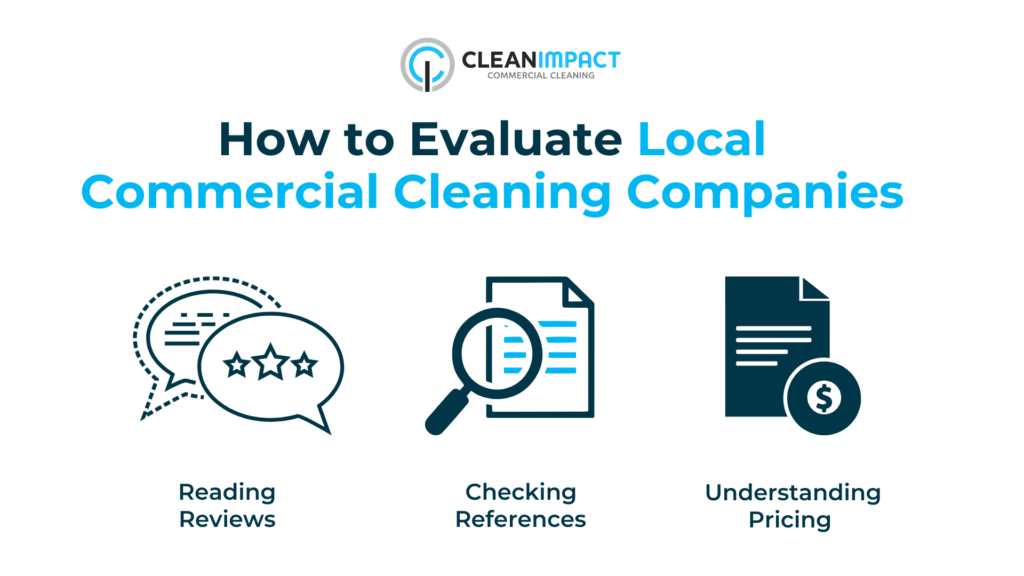
Reading Reviews and Checking References
Online reviews provide valuable insights, but savvy business owners look beyond star ratings. The pattern and specificity of reviews matter more than overall scores. A cleaning company with 100 five-star reviews that all say “great service” raises suspicion. Authentic reviews describe specific experiences, mention employee names, and include both positives and constructive criticism.
Pay attention to how companies respond to negative reviews. Professional commercial cleaning services acknowledge complaints, explain what went wrong, and describe corrective actions taken. Defensive or dismissive responses suggest poor accountability. A company that ignores negative feedback entirely shows disregard for customer satisfaction.
Direct references trump online reviews. Ask potential cleaning contractors for three current clients in similar industries. Contact these references and ask pointed questions:
- How long have they used the service?
- What problems have occurred and how were they resolved?
- Does the cleaning crew arrive reliably on schedule?
- Have they noticed any quality decline over time?
- Would they hire this company again?
References provided by the company might naturally skew positive, so check for unbiased feedback elsewhere. Business networking groups, chamber of commerce contacts, and industry associations can provide unfiltered opinions about local cleaning contractors.
Understanding Pricing Structures and Contracts
Commercial cleaning pricing varies dramatically based on several factors. Square footage represents the starting point, but cleaning intensity matters more than space size. A 5,000 square foot medical office requires more intensive cleaning than a 10,000 square foot warehouse with minimal foot traffic.
Most cleaning companies use one of three pricing models:
- Per Square Foot Pricing – Simple calculation based on cleanable space (typically $0.07-$0.25 per square foot for standard office cleaning)
- Hourly Rates – Charges based on time spent cleaning (usually $25-$50 per cleaning professional hour)
- Flat Monthly Fee – Fixed rate for defined services regardless of time or square footage
Hourly rates can create perverse incentives where slower work generates more revenue. Flat fees encourage efficiency but may lead to cut corners if the price is too low. Per square foot pricing works well for straightforward spaces but needs adjustment for complex layouts or specialized requirements.
Contract terms protect both parties when properly structured. Short initial contracts (30-60 days) allow businesses to evaluate service quality before long-term commitment. Cancellation clauses should permit termination with reasonable notice—30 days represents industry standard. Avoid contracts that impose penalties for early termination or require extended commitments without trial periods.
Asking the Right Questions Before Hiring
An in-person walkthrough with the cleaning company owner or manager reveals more than phone conversations. Bring a list of essential questions:
Operational Questions:
- What happens if the regular crew member calls in sick?
- How do you handle quality complaints?
- What’s your employee turnover rate?
- Do you conduct background checks on all staff?
- How often do supervisors inspect cleaning quality?
Service-Specific Questions:
- Which areas are included in standard cleaning?
- What tasks require additional fees?
- Do you provide cleaning supplies and equipment?
- Can we adjust the schedule for special events?
- How do you handle secure areas or confidential information?
Problem-Solving Questions:
- What’s your emergency response procedure for after-hours issues?
- How do you handle damage to company property?
- What happens if cleaning standards aren’t met?
- Can you provide additional services for special situations?
The quality of answers matters as much as the content. Evasive responses or reluctance to provide details suggests potential problems. Professional janitorial service companies answer questions confidently and provide documentation supporting their claims.
The Clean Impact LLC Difference in Commercial Cleaning
Customized Cleaning Plans for Every Business
Cookie-cutter cleaning programs waste money on unnecessary services while neglecting critical needs. Clean Impact LLC develops individualized cleaning protocols based on thorough facility assessments. This process begins with understanding business operations, traffic patterns, and specific concerns.
A law office needs different attention than a dental clinic. The law office emphasizes presentation—dusted furniture, spotless glass, and pristine conference rooms. The dental clinic requires medical-grade disinfection with EPA-registered products and strict cross-contamination protocols. Generic cleaning specifications miss these nuanced requirements.
The customization extends to scheduling flexibility. Some businesses need overnight cleaning to avoid disrupting operations. Others prefer day porter services that address messes in real-time. Clean Impact LLC adapts to client preferences rather than forcing businesses into rigid scheduling slots. This flexibility proves especially valuable for retail operations with extended hours or manufacturing facilities running multiple shifts.
Trained and Vetted Professional Staff
The person holding the mop determines cleaning quality more than the mop itself. Clean Impact LLC implements rigorous hiring standards that exceed industry norms. Every cleaning professional undergoes:
- Comprehensive background checks including criminal history
- Reference verification from previous employers
- Skills assessment testing for basic cleaning competency
- On-site training in proper techniques and safety protocols
- Ongoing education in new products and methods
Employee retention rates reflect company culture and job satisfaction. High turnover plagues the cleaning industry, with some companies experiencing 200-400% annual turnover. This revolving door means businesses constantly deal with inexperienced cleaners learning on the job. Clean Impact LLC maintains turnover below 40% through competitive wages, respect for workers, and clear advancement paths.
Training programs cover more than cleaning techniques. Staff learns customer service skills, communication protocols, and problem-solving approaches. A cleaner who notices a water leak and reports it immediately prevents thousands in damage. These awareness skills distinguish professional cleaning teams from low-cost alternatives.
Eco-Friendly Solutions That Work
Environmental responsibility doesn’t require compromising cleaning effectiveness. Modern green cleaning products match or exceed traditional chemical cleaners in performance while reducing health risks. Clean Impact LLC prioritizes eco-friendly commercial cleaning through:
Product Selection Criteria:
- EPA Safer Choice or Green Seal certification
- Low VOC (volatile organic compound) formulations
- Biodegradable ingredients that minimize environmental impact
- Concentrated formulas reducing packaging waste
- Refillable containers eliminating single-use plastics
Microfiber technology reduces chemical dependence. Quality microfiber cloths and mops physically remove 99% of bacteria from surfaces using only water. This mechanical cleaning process eliminates chemical residue concerns while achieving superior sanitation results. The investment in premium microfiber pays for itself through reduced product costs and longer equipment life.
Indoor air quality improves dramatically with green cleaning approaches. Traditional cleaning products release chemicals that accumulate in enclosed spaces, causing respiratory irritation and allergic reactions. Employees report fewer headaches, less eye irritation, and reduced sick days when businesses switch to environmentally responsible commercial cleaning solutions.
Red Flags to Avoid When Hiring Janitorial Services
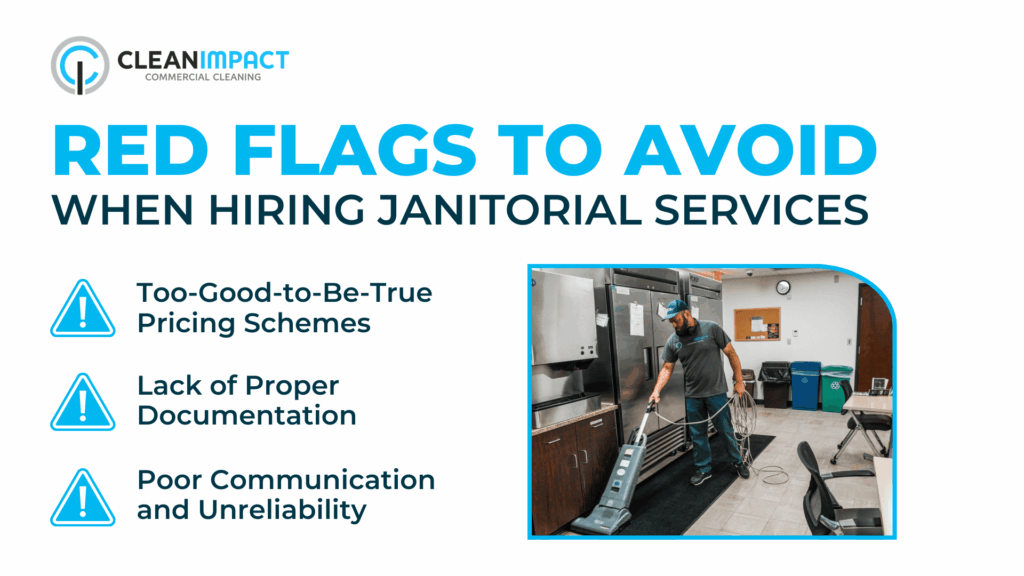
Too-Good-to-Be-True Pricing Schemes
When a cleaning quote comes in at half the competition’s price, something’s wrong. Suspiciously low bids indicate corners being cut—either through substandard products, untrained workers, or inadequate insurance coverage. A small business in Florida learned this lesson after hiring the cheapest business cleaning company near me. The company used dirty mops, diluted chemicals to ineffectiveness, and disappeared after two months without notice.
Legitimate cleaning costs include fixed expenses: labor, insurance, supplies, equipment, overhead, and reasonable profit. Companies bidding below sustainable price points either:
- Plan to raise prices after the initial contract period
- Will perform minimal cleaning to match the low price
- Operate illegally without proper insurance or tax compliance
- Use bait-and-switch tactics adding unexpected fees
Request itemized quotes that break down costs by service category. Transparent pricing reveals what’s included and what costs extra. Compare multiple quotes on an apples-to-apples basis by specifying identical service requirements to each bidder.
Lack of Proper Documentation
Professional commercial cleaning companies operate as legitimate businesses with proper documentation. Red flags include:
- Refusing to provide proof of insurance
- Unable to produce business license or tax ID
- No written contract or work agreement
- Vague service descriptions without specific tasks listed
- No formal invoice or payment receipts
Some fly-by-night operators claim they’ll provide documentation “later” then disappear after collecting payment. Others present falsified certificates hoping clients won’t verify authenticity. Due diligence requires confirming credentials before signing contracts or allowing access to facilities.
Written contracts protect both parties by establishing clear expectations. The agreement should specify services performed, frequency of service, pricing structure, payment terms, termination clauses, liability provisions, and quality standards. Oral agreements or handshake deals invite misunderstandings and disputes.
Poor Communication and Unreliability
How a cleaning company communicates during the sales process predicts future service reliability. Warning signs include:
- Difficulty reaching the company by phone or email
- Days passing before returning inquiries
- Missed or rescheduled appointments without notice
- Vague or incomplete answers to straightforward questions
- Pressure tactics to sign immediately without time for consideration
Communication problems multiply after contracts are signed. A cleaning company that’s unresponsive before landing the account will be worse afterward. Business owners need cleaning partners who answer phones, address concerns promptly, and maintain consistent contact.
Reliability extends beyond communication to performance. Cleaning crews should arrive on schedule within agreed windows. Last-minute cancellations or no-shows disrupt business operations. Professional janitorial services maintain backup staff to cover absences and notify clients immediately when schedule changes become necessary.
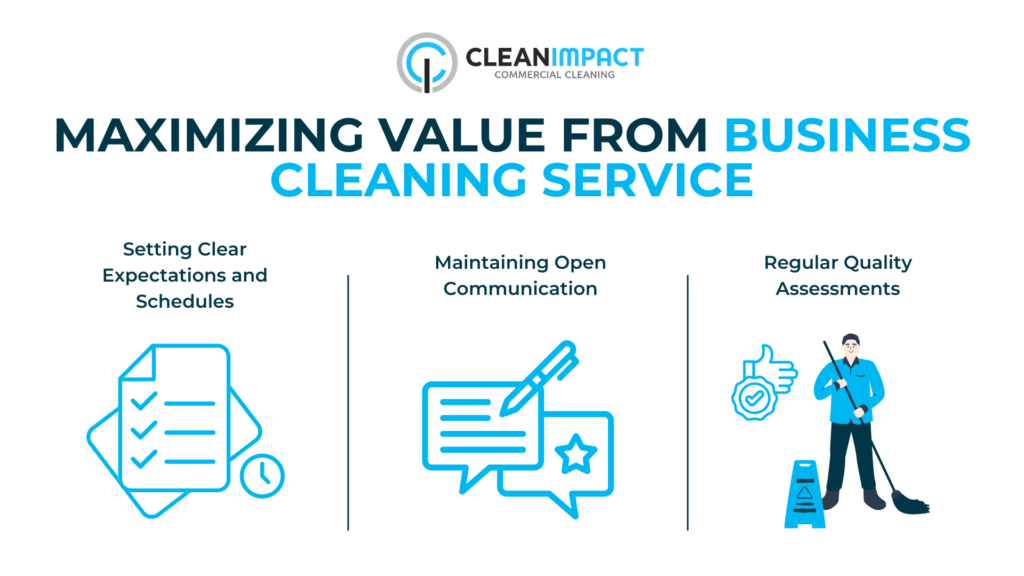
Maximizing Value from Your Business Cleaning Service
Setting Clear Expectations and Schedules
The foundation of a successful cleaning relationship starts with explicit expectations documented in writing. Create a detailed checklist specifying:
- Which rooms receive cleaning and which are excluded
- Specific tasks performed in each area
- Frequency of each cleaning activity
- Quality standards for completion (e.g., “no visible dust on horizontal surfaces”)
- Time windows for cleaning crew arrival and departure
Ambiguity causes conflict. One office manager expected weekly window cleaning while the cleaning contract included monthly service. The misunderstanding festered for months before anyone addressed it directly. Clear upfront communication prevents these frustrations.
Schedule coordination becomes especially important in shared spaces or multi-tenant buildings. Cleaning crews need access to locked areas, alarm codes, and parking arrangements. A comprehensive onboarding checklist ensures nothing gets overlooked:
- Building access procedures and key distribution
- Alarm system codes and instructions
- Emergency contact information
- Restricted or sensitive areas requiring special protocols
- Preferred supply storage locations
- Waste disposal and recycling procedures
Maintaining Open Communication
Establishing a regular communication cadence keeps minor issues from becoming major problems. Weekly or bi-weekly check-ins allow both parties to address concerns while they’re fresh. These brief conversations might happen in person, by phone, or via email depending on preference.
Feedback should be specific rather than general. Instead of “the office doesn’t look clean,” provide detail: “the break room counters still show coffee stains” or “dust remains visible on the reception desk.” Commercial cleaning services can’t correct problems they don’t understand. Specific feedback enables immediate improvement.
Positive feedback matters as much as constructive criticism. When cleaning crews perform exceptional work or handle a difficult situation well, acknowledge it. Recognition builds rapport and motivates continued excellence. A simple “thank you” or positive note to company management creates goodwill that benefits the relationship long-term.
Regular Quality Assessments
Formal quality inspections prevent gradual service degradation. Some businesses conduct monthly walkthroughs using standardized checklists, scoring each area numerically. This objective approach documents performance trends over time. If scores decline for three consecutive months, management has concrete evidence supporting difficult conversations.
Surprise spot checks provide additional quality assurance. While regular inspections occur on known schedules, periodic unannounced assessments reveal typical performance rather than best behavior. Professional cleaning companies welcome these checks as opportunities demonstrating consistent quality.
Quality standards should be reasonable and achievable. Expecting perfection in every corner of a 20,000 square foot facility daily sets everyone up for disappointment. Focus on high-impact areas where cleanliness matters most—reception areas, restrooms, and customer-facing spaces. Less visible areas might accept lower standards without compromising business operations.
Making the Smart Choice for Your Business
The search for a business cleaning company near me represents more than finding someone to empty trash cans. Professional commercial cleaning creates work environments where employees thrive and customers feel welcome. The investment pays dividends through improved productivity, better health outcomes, and enhanced reputation.
Smart business owners approach cleaning service selection with the same diligence applied to other vendor relationships. They verify credentials, check references, compare detailed proposals, and start with trial periods before long-term commitments. The extra effort upfront prevents costly mistakes and establishes partnerships that deliver value for years.
Clean Impact LLC understands that every business has unique cleaning needs requiring customized solutions. The team brings expertise across diverse industries, from medical offices to manufacturing facilities. Trained professionals use advanced equipment and eco-friendly products to maintain the highest sanitation standards. Most importantly, reliable communication and responsive service ensure clients receive consistent quality they can depend on.
Ready to experience the difference professional commercial cleaning makes? Contact Clean Impact LLC today for a free facility assessment and customized cleaning proposal. The team stands ready to transform workplace environments through proven cleaning protocols and exceptional service. Don’t settle for mediocre cleaning when superior solutions are available right in the local area.